

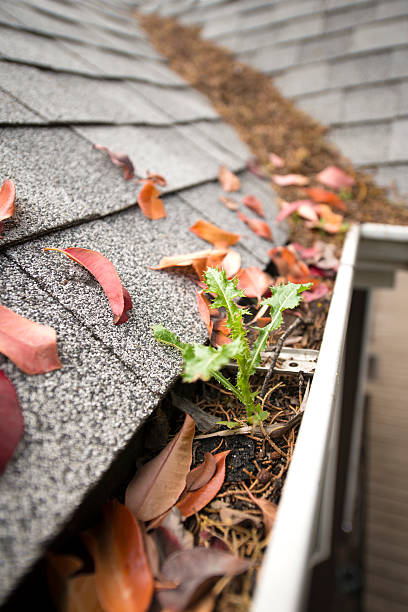
Your home’s gutters and downspouts play a quietly critical role: they channel rain and melted snow safely away from your roof, walls, and foundation. Neglect them, and you risk water damage, foundation problems, roof leaks, and costly repairs. The good news? With regular attention and safe practices, maintaining gutters is manageable.
Whether you’re sprucing up a flip-house or caring for your own home, this guide will help you keep your drainage system healthy, functional, and safe.
What Gutters & Downspouts Do and Why Maintenance Matters
Gutters collect rainwater that runs off your roof. Downspouts then carry that water down and away from your house foundation. Without them (or if they’re clogged/damaged), water can spill over, sit near the foundation, or seep into siding which can lead to wood rot, basement leaks, mold, and structural problems. Regular maintenance helps prevent these problems before they start.
Keeping your gutters clear also helps them last longer by avoiding rust, sagging, leaks, and damage to seams or joints.
When You Should Clean or Inspect and How Often
-
Twice a year is a good baseline — typically spring and fall, to catch buildup from fallen leaves, pollen, or winter debris.
-
If you live near trees, or have lots of leaves and pine needles falling on your roof you might need to check more often.
-
Also inspect after heavy storms, major roof debris, or when you notice water overflow, sagging gutters, or downspouts that don’t drain well.
How to Safely Perform Gutter & Downspout Maintenance
If you decide to do this yourself, safety should be your top priority. Gutter maintenance often involves ladders and heights which can be especially risky if you’re older, less steady on your feet, or have mobility issues.
✅ Safety First
-
Use a sturdy, high-quality ladder on firm, level ground; avoid unstable or uneven surfaces.
-
Consider a ladder stabilizer or stand-off (so the ladder doesn’t rest directly on the gutter). This protects both your ladder’s stability and the gutter’s integrity.
-
Observe the “three-points of contact” rule: at all times, keep two feet and one hand, or two hands and one foot on the ladder. Don’t overreach; move the ladder instead.
-
Use proper protective gear: heavy-duty gloves (to guard against sharp metal, nails, or debris), non-slip shoes or boots, and safety glasses if possible (especially if flushing debris with water).
-
Run the job on a dry, calm day. Avoid rain, ice, strong wind, or wet gutters/roof surfaces.
If you feel unsteady or unwell, or if your home is more than one story strongly consider hiring a professional instead of risking a fall.
Step-by-Step Gutter & Downspout Maintenance Checklist
1. Clear Out Debris:
leaves, twigs, dirt, pine needles, or anything that might block water flow. A small gutter scoop or even gloved hands are fine. Use a bucket or bag to collect debris so it doesn’t fall all over your yard.
2. Flush Gutters & Downspouts with Water
after removing big debris, use a garden hose to rinse out any fine dirt or residual material. Start from the end farthest from the downspout so water flows through the system.
3. Check Downspouts for Clogs
water should flow freely down and away from your foundation. If flow is slow, use a plumber’s snake or a hose with some pressure to clear blockages.
4. Inspect Gutters & Downspouts for Damage
look for rust, cracks, loose fasteners or brackets, sagging or sections pulling away from fascia boards, damaged seams, or leaks. Damaged components can cause leaks or improper drainage later.
5. Check Gutter Slope / Pitch (if you have the ability)
gutters should slope slightly toward the downspouts (often a small slope, roughly ¼ inch per 10 feet of gutter) to ensure proper drainage. If the slope is off, water may pool or overflow instead of draining properly.
6. Ensure Downspouts Drain Water Away from Foundation
long-term drainage away from your house foundation helps prevent water damage, basement leaks, or soil erosion near the foundation. If downspouts discharge too close to the home, consider extensions or splash blocks.
7. Repeat Regularly
at least twice a year (spring and fall), more often if your home is surrounded by trees or after big storms.
When You Should Call a Professional
While many gutter maintenance tasks are homeowner-friendly, there are times when calling in a trained pro is the smart, safe choice, especially for older homeowners, folks with balance or mobility concerns, or when your home is more than one story. Consider hiring a professional if you notice any of the following:
-
Gutter sections that are significantly sagging, pulling away, bent, or detached from the fascia or roofline.
-
Repeated clogs or downspouts that won’t clear even after rinsing might indicate deeper blockage or drain-pipe issues.
-
Rust, major cracks, holes, or leaks, especially at seams, joints, or downspout connections, these could lead to leaks, foundation seepage, or structural damage over time.
-
A two-story or taller house, steep roof lines, or gutters that are hard to reach safely. Ladder work becomes risky and professionals have safer equipment and experience.
-
You have mobility, balance, or health issues no DIY task is worth a fall or injury. It’s better to hire experienced help than risk a serious accident.
Extra Tips & Prevention Ideas
-
Trim nearby trees or overhanging branches fewer falling leaves/projects = less frequent gutter maintenance.
-
Consider gutter guards or screens they reduce the amount of debris that gets into gutters (though you still need to inspect and clean gutters occasionally).
-
Inspect gutters after every heavy storm heavy rain, wind, or falling branches can shift gutters, loosen fasteners, or cause blockages.
-
If in a climate with freezing winters, make sure downspouts drain properly so water doesn’t pool, freeze, and cause ice dams which can damage gutters, roof edges, and foundation drainage.
Reliable Websites with More Info
If you want more detail or different perspectives, check out these homeowner-friendly resources:
-
“How to Clean and Maintain Your Gutters” — from a homeowner maintenance site provides a straightforward guide that aligns well with what we’ve discussed. HAR.com
-
“Essential Tips for Gutter Cleaning” — from a maintenance & safety resource includes ladder-safety best practices and what to watch out for when cleaning gutters yourself. Lowe's+2GutterFX+2
-
“Fast and Safe Tips for Residential Gutter Cleaning” — from a contractor-oriented site with practical maintenance recommendations and when it’s smart to call in a pro. Top Rated Gutters
Add comment
Comments